Eva Caballé is the author of the recently published book in Spanish Desaparecida. Una vida rota por la sensibilidad química múltiple (Missing. A life broken by Multiple Chemical Sensitivities) published by El Viejo Topo, Barcelona, Spain, 2009.
Interview by Salvador López Arnal, November 2009 :
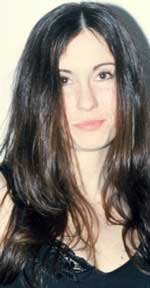 “Yes, there is something hidden in this silence. It is the interests of the chemical and pharmaceutical companies so that people won’t know that their products are causing new and terrible illnesses like Multiple Chemical Sensitivities (MCS). Actually, recently it has been demonstrated that MCS is not a psychological illness and that old studies that said so were fabricated to protect the interests of the chemical and pharmaceutical industries”.
Eva Caballé
Eva Caballé is a 37 year-old Barcelona economist who lives with MCS. She was a bank employee and was a member of the rock group Lefthanded and now is the author of the recently released book (in Spanish) released by the publishing house, Libros de El Viejo Topo, Desaparecida. Una vida rota por la sensibilidad química múltiple (Missing. A life broken by Multiple Chemical Sensitivities). In the book’s introduction, Clara Valverde, says: “…But Eva is not weird. It is known that 0.75% of the population now lives with severe MCS and that up to 12% have mild or moderate MCS. All those people who are bothered by smells, those are part of that 12%. But most doctos and the majority of society are not aware of this and that is why it has taken Eva so many years to receive the right diagnosis. That is why Eva only has the help of her immediate family. That is why there are no demonstrations about this out on the streets nor her case is on the front page news.”
Eva Caballé is also the author of the blog “No Fun”. She says: “No Fun is a blog about Multiple Chemical Sensitivities, Chronic Fatigue Syndrome/ME and Fibromyalgia with information and advice for people who are sick and for anyone who wants to live a healthier life free of toxics”.
López-Arnal: Let’s start with a definition. What is MCS?
Eva Caballé: MCS is an aquired chronic illness, not a psychological one, which manifests itself with multisystemic symptoms as a reaction to a very small exposure to chemical products, normal everyday chemicals but unnecessary ones, like perfumes, air fresheners or laundry softeners.
The symptoms, which are chronic and they become acute in a crisis, include fatigue and respiratory, disgestive, cardiovascular, dermatological and neurological problems.
MCS is a syndrome with three grades of severity, so not all of us who are sick suffer the same level of disability and isolation.
It is an illness which has been known since the 1950s, but it has yet to be recognized by the World Health Organization (WHO), despite that there are more than 100 research articles that support the organic basis of MCS, that the number of people affected is increasing rapidly, at a younger age, and that the European Parlament includes MCS in the growing number of illnesses related to environmental factors.
LA: You say that MCS is not recognized by the WHO despite the number of scientific articles that support the organic basis of this illness. Why do you think that the WHO is so sceptical, so cautious?
EC: We know that the WHO has been debating the MCS issue for years. But the process of recognizing the illness is taking longer than usual due to the pressure that the chemical and pharmaceutical industries are putting on the WHO, as they are not interested in having it known that they are directly responsible for this illness.
Without going any further, in Germany, where MCS is recognized as an illness, the industries continue exercicing their control through tools like Wikipedia. This was denounced by the CSN Association in an article which I translated and published on my blog.
The article about MCS in Wikipedia in German is edited each day, sometimes every few minutes, because the administrators of Wikipedia, who have interests in the industry, veto the information trying to make sure that MCS is not known or if it is, that it be thought of as a psychosomatic illness.
LA: You also say that the number of people with MCS is growing rapidly. Can you give us any data to illustrate this?
EC: I am quoting Dr J Fernández-Solà (an Internal Medicine specialist from the Hospital Clinic in Barcelona) who, in an interview that was done with him at the beginning of this year for an article on MCS in the Spanish magazine, Interviu, said that the amount of patients who were seeking medical help for this illness is growing rapidly. In his hospital, each year, they get between 50 and 60 new patients. That means one new patient a week.
LA: What symptoms could make one think that they have this illness?
EC: Perhaps the most common symptom is to notice unbearable smells which one did not notice before. One stops tolerating various chemical agents like cleaning products, perfumes, tobacco smoke, car emissions, etc. When you have MCS and you are exposed to these chemical agents, a series of symptoms are triggered automatically like choking, irritation of the respiratory tract, tachycardia, headaches, mental confusion, dizziness, nausea, diarrhea, extreme fatigue and/or pain. These symptoms don’t get better until you stop being in contact with the chemical agent that produced it.
Normally you also stop tolerating alcohol, dairy products or gluten. You also develop intolerance to various foods and medications.
Often there are other environmental intolerances: to heat, to cold, to noise, to sunlight and to electromagnetic fields (computers, high power lines, telephones, cellular phone atennas, microwaves, etc).
LA: What differences are there between MCS and, let’s say, Fibromyalgia?
EC: MCS, Chronic Fatigue Syndrome/Myalgic Encephelitis (CFS/ME) and Fibromyalgia (FMS) are illnesses of the same family. In fact, many of us who have MCS, we actually have the three illnesses and more and more people with CFS/ME and FMS, with the years, also develop MCS.
We have a lot of the same symptoms, but the biggest difference is that those with MCS do not tolerate even the smallest exposure to chemical substances, which is the reason why we have to maintain a strict environmental control and we cannot go outside without a mask with a carbon filter to filter out the enviromental toxics.
LA: What medical treatment does a person with MCS receive from the Spanish health care system? Do you think it is adequate? Do you think it is fair?
EC: In Spain, MCS is not recognized as an illness and so health workers and the general population are not aware of this serious pathology.
Instead, countries like Germany, and recently Austria and Japan, have recognized it and other countries are on their way to doing so and offer health services to those who have it and are establishing protocols for prevention.
In Spain there are hardly any doctors in the public health care system who can diagnose this illness and it is very hard to get a diagnosis and even harder to get treatment. I am convinced that there are a lot of people in our country who have MCS who are not diagnosed, many of who end up in the hands of psychiatrists because of the lack of knowledge of our doctors. Also there are no protocols or policies on “Free of fragrances” for our hospitals and public buildings, so for us going to the hospital means getting sicker.
In Spain, we people with MCS do not have health care services, we do not have the right to economic help to adapt to our disability and we do not have the right to a pension when we cannot work. I don’t just see it as unjust: I think the way we are treated is a violation of our constitutional rights.
LA: But, isn’t it a bit of a contradiction the fact that the European Parliament considers MCS an environmental illness and that in Spain, the central government and the regional governments look the other way?
EC: Of course it is! It is all with the excuse that the WHO has not yet recognized it as an illness. This does not mean that it does not exist: the decisions that are taken at a bureaucratic level do not make us patients disappear by magic.
They use this argument to discredit the illness when it is all really a conflict of interests. Also they will tell you that there are no specific biomarkers for MCS, but that is the same as other illnesses which are recognized.
LA: What percentage of the population is it thought to be affected by this illness right now?
EC: According to the 2007 study published by doctors from the Barcelona’s Hospital Clinic, J. Fernández-Solà (Internal Medicine) and S. Nogué Xarau (toxicologist), 5% of the population has MCS. They specify that: “More that 15% of the general population present mechanisms of excessive response when faced with a chemical or environmental stimulus. In 5%, these processes are clearly pathological and they are above the organism’s capacity to adapt and so it results in skin, respiratory, digestive and neuropsychological manifestations, frequently chronic and persistent”.
So if MCS affects 5% of the population, it cannot be considered a “rare disease”, which are the ones that affect less than 0.0005% of the population.
LA: Are you speaking about the Spanish population or are you thinking in European or world terms?
EC: I am talking worldwide. It is considered an illness of the industrialized world.
In countries where there are statistics about this illness, like in Canada, we see that the amount of people that have MCS is not small. According to the Environmental Health Association of Quebec, there are 4 million people with MCS in Canada.
LA: And do we know the causes? MCS, as you have said, is a disease related to environmental factors. What does that mean exactly?
EC: Studies say that the cause is the toxics in the environment we are exposed to. There are two ways of developing MCS: from one single exposure to toxics at a high dose or by several exposures to small amounts over the years.
There are toxic substances in the air we breathe, in the water we drink (in the plastic if we drink bottled water), in the clothes we wear (formaldehyde, dyes, traces of pesticides), in the cleaning products, in our beauty products, in the food we eat (pesticides, additives and artificial colours which have been banned in the USA for many years for being cancer causing) or, for example, in the silver dental fillings (which have mercury).
Over the years, our body accumulates all these chemical substances which circulate in our environment without any controls, substances which we must remember that it has not been so many years that they have been in use, until the toxic load is unbearable and we end up getting sick, which according to our genetic make-up, it could end up being MCS. But other people do not get off scott-free because they will end up developing cancer, asthma, allergies, autoimmune diseases or any other illness of environmental origin.
Even doctors complain that there is no funding for researching MCS, that no one wants to fund MCS studies, because studies normally are funded by pharmaceutical companies so they can develop a medication, that is, for their own benefit. But as MCS patients do not tolerate any medication, we are of no interest to them.
LA: But, what sense does it have to know all this and not take any measures? Why do we keep using these products if we know of their toxicity and of the high risk their use entails? It is not an ideal situation the one you describe. Why do we not put some order in this toxic chaos?
EC: That is a good question. It does not make any sense to not take any measures and to keep on using these products. If health authorities do nothing, the option is to stop using these toxic products and it will have to be us who take charge of things.
In the labels on the fabric softener, the beauty products, the perfumes or the air fresheners it does not say: “Warning, this product is toxic and it will keep accumulating in your body until it causes you Multiple Chemical Sensitivities”. No one warned me. That is why I try to share all that I have learned ever since I got sick 4 years ago so that people will know what we are not being told.
If, for example, it is so hard to regulate tobacco, all this will surely be harder because we are not talking about one product. The problem is more than that. Has everyone forgotten that in the 1960s medical reports were hidden or changed, reports that showed that tobacco caused cancer? What is happening is nothing new. Power is not in the hands of politicians. It is in the hands of the multinationals.
LA: Describe, briefly, the life of a person with MCS. What measures does the person have to take? What treatment does the person have to undergo?
EC: The treatment is basically one concept: Environmental Control.
Environmental Control is to basically avoid, as much as possible, any exposure to toxics or chemical substances in general and the basic points are:
- Eat organic, non-processed foods (normally it is recommended to avoid dairy products and gluten).
- Filter the water, the drinking water and also the water for cooking and showering.
- Substitute all beauty and cleaning products with ecological ones, ones without aroma. Logically, one must stop using colognes, air fresheners, laundry softeners, etc.
- Use ecological clothing that does not have any dyes nor toxics.
- Get an air filter.
- Buy furniture and mattresses that are made of ecological materials that have not been treated with chemicals and when you paint the house, it must be ecological paint.
- Avoid or minimize exposure to electromagnetic fields.
- Use a carbon-filter mask when you go outside or in situations in which there are a high concentration of toxics.
- Try to live in an area which is the least contaminated as possible and in a house made of non-toxic materials.
As you can see, Environmental Control involves a high financial cost, for which we have no help and also, the last point, is almost impossible to carry out.
Besides Environmental Control, which is also beneficial for healthy people, there are personalized treatments. These involve nutritional supplements, saunas, oxygen therapy, etc. Each person with MCS is different and also some people have other added illnesses. Therefore, one has to have a lot of tests done to determine what is best in each situation. In Spain, none of this is covered by the public health care system.
Those of us with severe MCS can barely leave the house. Our lives are reduced to our house, which becomes our prison, in which most of us cannot even do any housework. In some cases, we spend most of the day in bed and rely of family members for almost everything. The contact with the outside world is reduced to talking on the phone, those who have energy to do so, the odd visit from people who are willing to change their washing and cleaning habits, and through Internet, for those of us who do not have severe cognitive or electromagnetic problems.
LA: What government help does a person with MCS receive? It does not seem possible for someone so sick to go to work. How can you organize your home if your family does not have the available time?
EC: We get no help when we have MCS. Even the masks, without which we cannot survive, we have to pay them ourselves. This is the economic drama that goes along with this illness.
When one has severe MCS, one cannot work, but if one has mild MCS it is not possible either because no employer is willing to adapt the work place so that a person with MCS can continue working. In some cases, some people get disability, but usually it involves going to court. We must remember that there are young people who get sick who have not worked long enough to have the right to a pension. What is their future? I always say that I am amazed that there is not more depression amongst people with MCS. Who would not be depressed in such a hard situation?
One can try to get disability, but the amount of money that one gets is very small, depending on the scale of severity recognized.
In my case, I am lucky to have my husband’s and my mother’s help, because I am so severely ill that I cannot do anything in the house, nor even cook for myself. Even if I had the money to pay someone to come and help me at home, that would not be possible. Just to be able to have my mother come over, she has had to change all her washing and cleaning habits as well as showering herself before coming.
LA: Why do we hear so little about Multiple Chemical Sensitivities? What is behind all this? What is behind this silence?
EC: Yes, there is something hidden behind this silence: the interests of the chemical and pharmaceutical industries not to have it known that their products cause terrible new illnesses like MCS. Recently it has been proven that MCS is not psychological and that studies that were done in the past which said that it was psychological were manipulated in order to protect the interests of the chemical and pharmaceutical industries.
Unfortunately, it is very easy for the government to ignore us, as most of us live under house arrest and we do not have the strength to organize ourselves. It is clearly an abuse of power. Only our families, friends and neighbours know we exist and how hard our everyday life is.
But, despite the seriousness of our situation, we are many, more every day who, from our homes, through Internet, fight for our rights, to try to make MCS visible and we share information to help each other out, as our government does not help us.
LA: You talk about studies that were altered that “showed” that MCS is a psychological illness in order to preserve the interests of large corporations. Were they blinded by the colour of money? Can you give us an example?
EC: On September 2008, the magazine Journal of Nutritional & Environmental Medicine, published a study by Goudsmit and Howes entitled “Is multiple chemical sensitivity a learned response? A critical evaluation of provocation studies” This study showed that MCS is not a psychological illness and that its origin is tied to chemical substances. I translated to Spanish the article that MCS America dedicated to this study:
“In the past, a small number of badly designed studies, suggested that MCS was a psychological illness related with pre-existing expectations and beliefs. This is a stance that the pharmaceutical and the chemical industries have made an effort to have everyone believe, because this way, their chemical products would stop being the responsible ones and the use of profitable psychiatric medications would be promoted, in the absence of medications which could counteract the effects of environmental contamination. Given the fact that most chemical and pharmaceutical companies have the same owner, this position has been promoted energetically and very cunningly through publications controlled by the industry itself. Fortunately, these manipulated studies were examined by Goudsmit and Howes using additional scientifically accepted criteria. That way, the studies that talked about a psychological base for MCS were proved to be very misleading due to numerous deficiencies and methodological mistakes. It was determined that MCS is related to exposure to chemical substances rather than to anxiety, psychosomatic states and depression.”
LA: One of your articles is entitled “We are born naked” and it has had a great repercussion amongst people with MCS and other people interested in the topic. Why? What was this article about?
EC: I wrote the article for the on-line cultural magazine Delirio, which exposed, without holding back, the total neglect and abandonment that we, people with MCS, suffer, making a special point on the situation in Spain. “We are born naked” had also two photos of me naked wearing a mask which caught the attention of MCS associations in other countries, which resulted in it being translated into 9 different languages.
The reason for its success is that people ill with MCS all over the world felt totally identified with the situation we live in Spain. Unfortunately, even in countries were MCS is recognized, people with this illness are abandoned and silenced because of the economic interests go before our health.
In the next number of Delirio, dedicated to the topic of silence, there will be another article on MCS. They have asked me to write it to explain the success of “We are born naked” and that way we continue to inform on MCS.
We are the “canaries in the mine”, we are the warning of the disaster which is coming. We are the evidence that the actual model of society has failed, although no one wants to admit it nor pay for it, nor do anything about it. For all this, they want to silence us.
LA: Disaster that is coming? What disaster? Why has the actual model of our society failed? Is this because of the illnesses it generates? Tell me about a more humane model.
EC: The cases of MCS are increasing rapidly and in younger and younger people. Each day there are more children with allergies, asthma, with celiac intolerance, etc. The cases of cancer are multiplying and are appearing in families with no cancer history. There are constantly new studies that show the relationship between chemical substances and electromagnetic radiations with certain cancers or an increase in allergies. If something is not done, the future that awaits us is not that of a healthy society.
I, like other people with MCS, are the proof that this society has failed. When I was little, I use to think that the government looked after us and that if something was sold, it was because it was safe. I could not have been more wrong. The air quality in cities like Barcelona or Madrid is scandalous. Our food is full of pesticides, with all kinds of additives and they are allowing the use of transgenic modified foods. They let us get sick and then they abandon us with no help, with no health services as it has happened to me. You study and get a degree, you have a good professional career and when you are supposed to begin to enjoy your life, it is all over. Is that a Welfare State?
Measures have to be taken to stop putting the economic interests before health. Chemical substances and electromagnetic radiations should be banned and regulated. Transgenic modified foods should be banned. Organic farming should be encouraged as well as alternative energies…There is an infinite number of measures to be taken, but the important thing is to change the direction and to start before it is too late.
LA: You have written a book, a magnificent book, entitled Missing. Why Missing? Where have you disappeared from?
EC: Thank you for praising my book. As a new writer, it is an honour.
LA: The honour, dear Eva, will be that of the readers, I can assure you.
EC: I thought of the title when I read the great introduction to my book that Clara Valverde has written (she is a writer, president of the Liga SFC- CFS League- and lives with Chronic Fatigue Syndrome). It was then that I realized that a lot of people might think that I disappeared from the face of the Earth. I went from having a job with a lot of responsibility in a bank, going to the gym every day, going to rock concerts, going out with friends and sharing holidays with my family, to being locked up in my house to be able to survive. Seen from the outside my immediate group, I am missing, kidnapped by MCS.
The outside world is toxic for all, but for those of us who have MCS, it is to the point that we cannot go out without a carbon-filter mask that protects us from harmful chemical substances and, in some cases, the severity is such that even with a mask, we cannot go out. I am sentenced to live within my four walls because they have not taken measures to ban chemical substances that, in me, set of a crisis and in other people makes them develop an environmental illness. Does no one realizes that it is not normal that every day we hear of a cancer death? Does no one care that this society is sicker every day and that this is not sustainable?
LA: Finally, how should society and the health services act regarding these new illnesses? Are they really new? Can you suggest some basic ideas?
EC: As I was saying before, MCS it not really new as the first cases were reported in the 1950s. We cannot use the idea that they are new as an excuse in 2009 to justify that nothing has been done.
At an international level, the first thing should be that the WHO recognize MCS once and for all as an illness. But until this happens, our country should recognize MCS, following the example of other European Union countries. Also they should train doctors and adapt the health services for MCS. All this would also mean that we should have access to disability pensions and other support to be able to adapt to our illness.
Right now, when people with MCS get sicker, because of our illness or because of another illness we might also have, we do not have anywhere to go because there aren’t any hospitals that are prepared for us and health workers do not know about our pathology. That’s how serious our situation is.
It is also necessary to put into place prevention policies such as “Free of fragrances” ones in hospitals and public buildings and to control and ban certain substances. All this would be beneficial for the health and well-being of all citizens, not only those of us who have MCS.
And, obviously, there should be put in place a public education campaign so that people can get to know our disability. When you go out on the street with a mask, you leave yourself open to all kinds of mocking and abuses and this is unacceptable. There are people who are ill who do not even get any support from their friends and family, all because MCS is not recognized.
We are not asking for a special treatment, but an adequate treatment for the problems that this illness creates.
LA: What you are saying and asking for is very reasonable. Thank you for your words. Would you like to add something else?
EC: Yes. I would like that making my situation public, as I do through my blog and now, even more, through my book, could serve as a warning to all those who are still healthy. Perhaps they think that because they do not have the genetic predisposition to MCS, they are safe, that they cannot get sick like I did. But this is not so. As I have told you, the chemical substances that cause MCS, also provoke many other illnesses. Also, we can and we should live in a different way, without so many chemical products and that will be good for our health and also for the environment. We must change before it is too late and the change starts with each one of us because as consumers we have a lot more power than we think. If there is no demand, then there is no offer.
And to end I would like to bring up a paragraph from my article “We are born naked”:
“Those of us who live with MCS would like this illness to be recognized, we would like to have the same rights as other chronic patients, we would like society to know of the risk it is in, we would like the government to protect its citizens and to help them prevent getting sick unnecessarily. We don’t want anyone else to feel naked because of having MCS”.
—
Interview by Salvador López Arnal with Eva Caballé, November 2009