
International Journal of Occupational and Environmental Health Features Discovery of Asbestos-Related Pain Origin

Asbestos Mine

International Journal of Occupational and Environmental Health Features Discovery of Asbestos-Related Pain Origin from Scientists at the Karmanos Cancer Institute in Detroit 

Scientists at the Barbara Ann Karmanos Cancer Institute’s National Center for Vermiculite and Asbestos-Related Cancers (NCVAC) have discovered a probable reason for the unrelenting chest pain experienced in certain patients with asbestos-related diseases and cancers. The findings, featured in the July 20, 2009 edition of the International Journal of Occupational and Environmental Health, were published in an academic peer-reviewed manuscript by principal author Michael Harbut, M.D., MPH, co-director of the NCVAC and chief of the Center for Occupational and Environmental Medicine, affiliated with Wayne State University.  

Harbut reported the findings after studying a patient who was exposed to taconite dust as a child.  

Using a new radiography approach developed by Carmen Endress, M.D., FACR, associate professor of Radiology, Wayne State University School of Medicine and radiologist at the NCVAC, there was a documented increase in pleural plaques, causing erosion on the interior wall of the ribs. 

“This action of the pleural plaque against the covering of the bone and the bone itself is a biologically plausible and an anatomically logical explanation of the unrelenting pain which some patients experience,” said Dr. Harbut.

This new imaging approach involves enhancing images obtained on the 64-slice high resolution CT scan using the Vitrea(R) imaging software program by Vital Images. By using this imaging approach, Dr. Harbut was able to demonstrate that: 

Evidence based on the CT findings, the physical examination, pulmonary function studies, epidemiology and history of the patient’s intractable pleural pain meets the criteria for diagnosis of asbestosis. Combined with the known science of taconite dust, a link between the mine where the patient’s father worked and the patient’s disease was established.  

Due to the clarity and definition of this new imaging approach, it is more likely to detect asbestos-related diseases and cancer at an earlier stage.  

Earlier detection will allow the possibility for additional treatment options to manage the pain caused by pleural plaque beyond the narcotics often prescribed for patients with advanced stages of asbestos disease. This includes exploring other forms of traditional and nontraditional methods to control pain.  

The patient, studied since 2004 and currently 55 years of age, was exposed as a child to taconite dust unknowingly by her father, a taconite miner from 1962 – 1969, who carried the taconite dust on his work clothes. Taconite is used in the production of steel and road-patching material. It has been mined in Michigan and Minnesota. 

The patient has experienced increasing pain on her right side for the past 31 years, a persistent cough and wheezing. As the pain increased so did her medication. Using the new imaging approach, Dr. Harbut was able to show the progression of the patient’s pleural plaque over a three year period, from 2005 – 2008. The patient’s pleuritic pain, as well as the findings of her pulmonary function, physical exam and symptomology are consistent with those diagnosed with asbestosis and pleural plaques, as established by the American Thoracic Society.  

These findings also support earlier human and animal reports that dusts produced by taconite mining can evoke the same biological responses as do other fibers already defined as asbestos or asbestiform materials. 

Harbut added, “Patients often require a lifetime of narcotics to allow functioning, but we are hopeful that with this new imaging technology, more selective pain management approaches with fewer side effects can be instituted resulting in a better quality of life.”

Finally, the report supports the identification of taconite, which has not yet been categorized as asbestos but causes a disease consistent with asbestosis, and recommends a reevaluation of the definition of asbestos. This is especially important within the context of legislative efforts to prohibit the use of asbestos. 

Karmanos scientists are continuing their series of patient studies and will submit similar findings for peer review later this summer.  

In addition to Dr. Harbut, co-authors of the report include Carmen Endress, M.D., FACR; John J. Graff, Ph.D., MS, assistant professor, Wayne State University School of Medicine, and chief, Cancer Surveillance Research at the Barbara Ann Karmanos Cancer Institute; Christopher Weis, Ph.D., National Enforcement Investigations Center, United States Environmental Protection Agency; and Harvey Pass, M.D., director, New York University’s Division of Thoracic Surgery.  

About the National Center for Vermiculite and Asbestos-Related Cancers (NCVAC at Karmanos)  

In response to the United States Environmental Protection Agency’s (EPA) identification of major sources of public asbestos exposure in Michigan, and to address the need for early diagnosis and aggressive treatment of asbestos-related diseases, the Barbara Ann Karmanos Cancer Institute and the Center for Occupational and Environmental Medicine (COEM) affiliated with Wayne State University established Karmanos’ National Center for Vermiculite and Asbestos-Related Cancers. The NCVAC is co-directed by Michael Harbut, M.D., MPH, Karmanos Cancer Institute and Chief of the Center for Occupational and Environmental Medicine; and John J. Graff, Ph.D. MS, chief of Cancer Surveillance Research, Karmanos Cancer Institute and assistant professor, Department of Family Medicine and Public Health Sciences, Wayne State University School of Medicine. 

Reference: Barbara Ann Karmanos Cancer Institute, International Journal of Occupational and Environmental Health Features Discovery of Asbestos-Related Pain Origin from Scientists at the Karmanos Cancer Institute in Detroit , US Newswire, DETROIT, July 20, 2009.
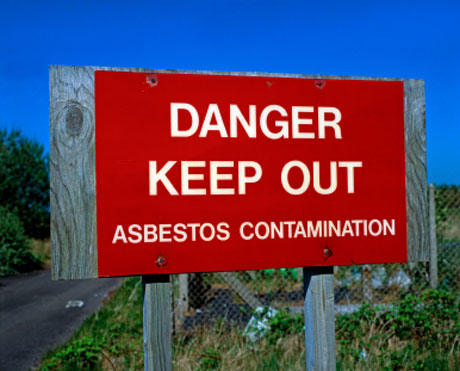
 

Asbestos – EPA Announces Public Health Emergency in Libby, Montana

Asbestos-keep-out

EPA to Move Aggressively on Cleanup and HHS to Assist Area Residents with Medical Care  

WASHINGTON – U.S. Environmental Protection Agency Administrator Lisa P. Jackson today announced the agency has determined that a public health emergency exists at the Libby asbestos site in northwest Montana.  Over the past years, hundreds of asbestos-related disease cases have been documented in this small community, which covers the towns of Libby and Troy. The announcement was made today at a joint press conference with Department of Health and Human Services Secretary Kathleen Sebelius and U.S. Sens. Max Baucus and Jon Tester.  

This is the first time EPA has made a determination under the Comprehensive Environmental Response, Compensation, and Liability Act (CERCLA) that conditions at a site constitute a public health emergency.  This determination recognizes the serious impact to the public health from the contamination at Libby and underscores the need for further action and health care for area residents who have been or may be exposed to asbestos. Investigations performed by the Agency for Toxic Substance and Disease Registry have found the incidence of occurrence of asbestosis, a lung condition, in the Libby area staggeringly higher than the national average for the period from 1979-1998. EPA is working closely with the Department of Health and Human Services, which is making available a short-term grant to provide needed asbestos-related medical care to Libby and Troy residents.  

During her Senate confirmation hearing, Administrator Jackson committed to review the situation at the Libby asbestos site based on current site information, sound science and EPA’s legal authorities. As a result of her review, the Administrator has decided that conditions at the site present a significant threat to public health and that making a public health emergency determination is appropriate.  

“This is a tragic public health situation that has not received the recognition it deserves by the federal government for far too long. We’re making a long-delayed commitment to the people of Libby and Troy. Based on a rigorous re-evaluation of the situation on the ground, we will continue to move aggressively on the cleanup efforts and protect the health of the people,” said EPA Administrator Lisa P. Jackson. “We’re here to help create a long and prosperous future for this town.” She added, “Senator Max Baucus has been a tireless advocate for the people living in Libby and Troy who have confronted this public health tragedy for generations and we commend him for his work. We look forward to working with him and Senator Tester who has been working diligently since being elected to the Senate to bring much needed support to these communities.”  

“Senator Baucus and Senator Tester have powerfully brought the voices of the people of Libby and Troy to Washington so the nation could hear and understand what happened. They refused to give up on finding the best ways to help those who have suffered so much. Today’s announcement reflects our Administration’s concern for the residents of Lincoln County and our intention to act decisively to protect and improve their health and quality of life,’ said Secretary Sebelius. “The Department of Health and Human Services has been working closely with the EPA and the residents of Lincoln County for a number of years to conduct screenings and help provide access to care. Now, we have come together with Senator Baucus and Senator Tester, Administrator Jackson, and agencies across HHS, to offer a new grant to provide short-term medical assistance for screening, diagnostic and treatment services in a comprehensive and coordinated manner in partnership with local officials on the ground in Lincoln County. “  

Sen. Max Baucus, a long-time advocate on this issue, consistently sought out a determination of a public health emergency in this region.  

“This is a great day for Libby. This is a town that was poisoned by W.R. Grace, then had to wait year after year as the last administration failed to determine that public health emergency exists. But today is a new day,” said Sen. Baucus. “Today is the day that Administrator Jackson did the right thing and made this vital determination. Today is the day that Secretary Sebelius declared that people in Libby will get the health care they need. Today is the day that after years of work we were able to succeed in getting this done. Yet, we won’t stop here. We will continue to push until Libby has a clean bill of health.”  

“This is a long-overdue, common-sense decision that will go a long way for Libby and the thousands of folks who were poisoned there,” Sen. Tester said. “This decision will help make quality health care more accessible and it will open the door to get new resources on the ground.  We still have a long way to do right by the folks in Libby.  Working together with the Department of Health and Human Services and the Environmental Protection Agency, we’re making very good progress.”   

Secretary Sebelius tasked two HHS agencies – the Health Resources and Services Administration and the Centers for Disease Control and Prevention/Agency for Toxic Substances and Disease Registry – to help county residents. These two agencies will support a new grant to assist affected residents who need medical care. Local officials are currently putting together a grant proposal that will lay out options for provision of medical care that will work for the residents of Lincoln County. HHS anticipates that this grant can be awarded in August 2009.  

The Libby asbestos site has been on the EPA’s Superfund National Priorities List since 2002, and cleanup has taken place since 2000.  EPA has made progress in helping to remove the threat of asbestos in the land and air, and with it, the increased risks of lung cancer, asbestosis, and other respiratory problems. While EPA’s cleanup efforts have greatly reduced exposure, actual and potential releases of amphibole asbestos remain a significant threat to public health in that area.  

The Libby asbestos site includes portions of the towns of Libby and Troy and an inactive vermiculite mine seven miles northeast of the town. Gold miners discovered vermiculite in Libby in 1881; in the 1920s the Zonolite Company formed and began mining the vermiculite.  In 1963, W.R. Grace bought the Zonolite mining operations. The mine closed in 1990. It is estimated that the Libby mine was the source of over 70 percent of all vermiculite sold in the United States from 1919 to 1990.  

More information: http://www.epa.gov/libby 

EPA, EPA Announces Public Health Emergency in Libby, Montana,  June 17, 2009