Study shows: Athletes, spectators faced unprecedented air pollution at 2008 Olympic Games

beijing-smog-at-olympics

Particulate air pollution during the 2008 Olympic Games in Beijing constantly exceeded levels considered excessive by the WHO – World Health Organization, was far worse than other recent Olympic Games, and was about 30 percent higher than has been reported by Chinese environmental experts – even though some favorable weather conditions helped reduce the problem. 

The weather, in fact, turned out to be more valuable in addressing this concern than major programs by the Chinese government to heavily restrict automobile use, close factories and slow construction during and before the Olympic games. 

These findings are among the final results just published in Environmental Science and Technology, a professional journal, in the first comprehensive study of particulate air pollutants in Beijing and how they compared to past Olympics. 

The research was done before, during and after the 2008 Olympics by scientists from Oregon State University and Peking University, in work funded by the National Science Foundation in the United States and the National Science Foundation of China. 

“Considering the massive efforts by China to reduce air pollution in and around Beijing during the Olympics, this was the largest scale atmospheric pollution experiment ever conducted,” said Staci Simonich, an OSU associate professor of environmental and molecular toxicology. “Despite all that, it was some evening rains and favorable shifts in the winds that provided the most relief from the pollution. 

“This demonstrates how difficult it is to solve environmental problems on a short-term, local basis,” she added. 

And despite some favorable weather and the pollution control efforts, researchers said, the end result was some of the most severe particulate pollution that Olympic athletes have dealt with in recent games. The levels were about two to four times higher than that of Los Angeles on an average day. 

In some of the first comparisons of these type ever made, scientists determined that particulate matter air pollution in the Beijing Olympics were about double the levels of recent games in Athens, Greece; triple those of Atlanta, Ga.; and 3.5 times higher than the games in Sydney, Australia. However, the study also noted that, because of its control efforts, Beijing had the most significant decrease in particular air pollution compared to the other Olympic sites around the time of their games. 

Despite these efforts, levels of coarse particular matter were higher than considered safe by the World Health Organization 81 percent of the time during the Beijing Olympics. They reached unacceptable levels 100 percent of the time for the most dangerous particulate matter (smaller than 2.5 microns), which is more easily inhaled into the lungs and causes more serious health problems. Levels of the smaller, most harmful particulate matter was also the least affected by government efforts to reduce pollution output, the study concluded.

 The finding of levels of pollution higher than those announced previously by Chinese officials reflects a difference in measurement methodology, researchers said, although the approaches used in this study have been widely accepted for many years. 

The studies were initially prompted due to traditionally high levels of air pollution in Beijing and the potential risk they posed to athletes and spectators, Simonich said. The city of 17 million people is surrounded by mountains in several directions that trap air pollutants, and has faced significant increases in particulate air pollution in recent years due to increasing industrialization, numbers of automobiles, coal and biomass burning, and other causes. 

Atmospheric particulate matter, researchers say, is a concern because various sized particles have potentially toxic chemicals “sorbed” to them. The fine particles have been linked to increased respiratory morbidity and mortality. In China, particulate matter air pollution is believed to be responsible for about one million premature deaths per year, researchers said in their study. 

Of some note, the scientists said, is that efforts taken to constrain air pollution may be having a lasting value – particulate matter air pollution in Beijing was as much as 27 percent lower last fall than in the same months a year earlier. Some of this, however, may have been attributable to lower levels of industrial and economic activity. 

Simonich said that there is no scientific evidence so far of any health problems that have been linked to the short-term exposure of athletes or spectators to this pollution during the Olympic competition. 

“The athletes and visitors were only exposed for a very short time,” Simonich said. “Millions of other people there face this air quality problem their entire lives. It was unlike anything I’ve ever seen – you could look directly at the sun and not have a problem, due to the thickness of the haze.” 

Reference: Oregon State University, Athletes, spectators faced unprecedented air pollution at 2008 Olympic Games, CORVALLIS, Oregon, June 19, 2009
Fibromyalgia Patients Show Decreases In Gray Matter Intensity

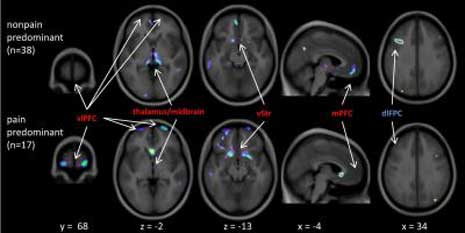
Previous studies have shown that fibromyalgia is associated with reductions in gray matter in parts of the brain, but the exact cause is not known. Using sophisticated brain imaging techniques, researchers from Louisiana State University, writing in The Journal of Pain, found that alterations in levels of the neurotransmitter dopamine might be responsible for gray matter reductions.

For the study, magnetic imaging resonance data from 30 female fibromyalgia patients were compared with 20 healthy women of the same age. The primary objective of the study was to confirm original findings about reduced gray matter density in a larger sample of fibromyalgia patients. They explored whether there is a correlation between dopamine metabolic activity and variations in the density of gray matter in specific brain regions.

Results showed there were significant gray matter reductions in the fibromyalgia patients, which supports previous research. In addition, the fibromyalgia patients showed a strong correlation of dopamine metabolism levels and gray matter density in parts of the brain in which dopamine controls neurological activity.

The authors concluded that the connection between dopamine levels and gray matter density provide novel insights to a possible mechanism that explains some of the abnormal brain morphology associated with fibromyalgia.

Reference: American Pain Society (2009, June 18). Fibromyalgia Patients Show Decreases In Gray Matter Intensity. ScienceDaily. Retrieved June 19, 2009

New online tool links government food test results to pesticide toxicology science

food-chemicals

Searchable database shows pesticide residues still common

San Francisco, June 17, 2009 — Ever wonder about pesticides on your food? Or in your drinking water? In particular, which of those pesticides are most hazardous? A new tool from the nonprofit group Pesticide Action Network sheds new science-driven light on the invisible problem of pesticide residues.
 
Today’s launch of the What’s on My Food? database makes the results of government tests for pesticide residues in food available online in a searchable, easy-to-use format. The database shows what pesticides are found on each food, in what amount, and – for the first time – links those residues to the health effects associated with exposure to each of the chemicals.
 
“This kind of public visibility around pesticides is particularly needed in the U.S.,  since regulators base their decisions on toxicology studies that are almost all done by industry,” explains Dr. Brian Hill, Senior Scientist with Pesticide Action Network and the primary developer of the What’s on My Food? database. “Nearly 900 million pounds of pesticides are used in the U.S. every year, yet regulations depend on studies that are not peer-reviewed and are kept hidden behind the veil of ‘confidential business information.’” Hill notes that the 900 million figure is long overdue for updating, as the most recent pesticide use figures from the Environmental Protection Agency are for 2001.
 
In addition to highlighting the potential direct health effects of pesticide residues, the What’s on My Food? database points to the many problems associated with pesticide use before food reaches the kitchen table. Widespread use of agricultural chemicals threatens the health of workers and those in nearby communities and schools, as well as harming wildlife and contaminating ecosystems, according to the site.
 
“It’s time to shift away from reliance on these dangerous chemicals,” says Kathryn Gilje, Pesticide Action Network’s Executive Director. “In Europe governments have recognized that a healthy population and clean environment are worth more than short-term industry profits. They are moving toward safer and healthier ways to produce food, and we need to do the same.”
 
In the Take Action section of the site, Pesticide Action Network calls on consumers not only to vote with their dollars by choosing organic foods whenever possible, but also to become involved as “food citizens” demanding a clean, green and fair food production system.
 
Launch of the new database coincides with the release of Food, Inc., a film by the producers of An Inconvenient Truth that documents the dangerous health and environmental impacts of industrialized food production. Food reporter Michael Pollan calls Food, Inc. “the most important and powerful film about our food system in a generation.”
 

Reference: Pesticide Action Network North America, Searchable database shows pesticide residues still common, June 18, 2009

Resources:

Selenium and selenium-antagonistic elements in nutritional cancer prevention

selenium helps to prevent cancer

Selenium is an essential trace element with antioxidative, antimutagenic, antiviral and anticarcinogenic properties.  

There is increasing evidence that the dietary selenium intakes are sub-optimal in the populations of many countries and that human cancer mortalities would significantly decline if additional selenium was made available either through supplementation or the fortification of certain foods. An important property of selenium is its interaction with other elements that may be present in foods, the water, the workplace and the environment, e.g. As, Cu, Ni, Co, Cr, Mn, Zn, Cd, Sn, Pb, Hg, Bi, Mo, Ag, Au, etc.  

The sequestration of elements by selenium represents an efficient natural detoxification mechanism for some of these elements but also results in the physiological inactivation of selenium.  

Animal experiments confirm that the chronic exposure to low levels of these elements abolishes the cancer-protective effect of selenium. Human cancer is likewise significantly determined by the interactions of selenium with other elements, as evidenced by epidemiological, ecological and case-control studies. Cadmium, for example, is a key risk-increasing element for prostate cancer; for breast cancer, Cd, Cr, Zn are mainly contributing; for bronchial cancer (in smelter workers), Cd, As, Cr, Sb, Co, La, all these elements are in a reciprocal relationship with Se.  

While selenium remains the key cancer-protective trace element, the interpretation of its mode of action necessitates consideration of the effects of selenium antagonistic elements. 

Reference: Schrauzer GN., Selenium and selenium-antagonistic elements in nutritional cancer prevention, Department of Chemistry and Biochemistry, University of California-San Diego, La Jolla, CA, USA., Crit Rev Biotechnol. 2009;29(1):10-7

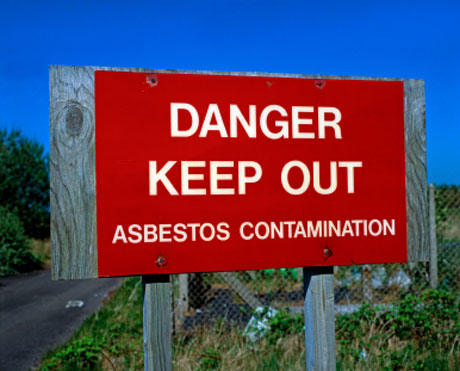
Asbestos – EPA Announces Public Health Emergency in Libby, Montana

Asbestos-keep-out

EPA to Move Aggressively on Cleanup and HHS to Assist Area Residents with Medical Care  

WASHINGTON – U.S. Environmental Protection Agency Administrator Lisa P. Jackson today announced the agency has determined that a public health emergency exists at the Libby asbestos site in northwest Montana.  Over the past years, hundreds of asbestos-related disease cases have been documented in this small community, which covers the towns of Libby and Troy. The announcement was made today at a joint press conference with Department of Health and Human Services Secretary Kathleen Sebelius and U.S. Sens. Max Baucus and Jon Tester.  

This is the first time EPA has made a determination under the Comprehensive Environmental Response, Compensation, and Liability Act (CERCLA) that conditions at a site constitute a public health emergency.  This determination recognizes the serious impact to the public health from the contamination at Libby and underscores the need for further action and health care for area residents who have been or may be exposed to asbestos. Investigations performed by the Agency for Toxic Substance and Disease Registry have found the incidence of occurrence of asbestosis, a lung condition, in the Libby area staggeringly higher than the national average for the period from 1979-1998. EPA is working closely with the Department of Health and Human Services, which is making available a short-term grant to provide needed asbestos-related medical care to Libby and Troy residents.  

During her Senate confirmation hearing, Administrator Jackson committed to review the situation at the Libby asbestos site based on current site information, sound science and EPA’s legal authorities. As a result of her review, the Administrator has decided that conditions at the site present a significant threat to public health and that making a public health emergency determination is appropriate.  

“This is a tragic public health situation that has not received the recognition it deserves by the federal government for far too long. We’re making a long-delayed commitment to the people of Libby and Troy. Based on a rigorous re-evaluation of the situation on the ground, we will continue to move aggressively on the cleanup efforts and protect the health of the people,” said EPA Administrator Lisa P. Jackson. “We’re here to help create a long and prosperous future for this town.” She added, “Senator Max Baucus has been a tireless advocate for the people living in Libby and Troy who have confronted this public health tragedy for generations and we commend him for his work. We look forward to working with him and Senator Tester who has been working diligently since being elected to the Senate to bring much needed support to these communities.”  

“Senator Baucus and Senator Tester have powerfully brought the voices of the people of Libby and Troy to Washington so the nation could hear and understand what happened. They refused to give up on finding the best ways to help those who have suffered so much. Today’s announcement reflects our Administration’s concern for the residents of Lincoln County and our intention to act decisively to protect and improve their health and quality of life,’ said Secretary Sebelius. “The Department of Health and Human Services has been working closely with the EPA and the residents of Lincoln County for a number of years to conduct screenings and help provide access to care. Now, we have come together with Senator Baucus and Senator Tester, Administrator Jackson, and agencies across HHS, to offer a new grant to provide short-term medical assistance for screening, diagnostic and treatment services in a comprehensive and coordinated manner in partnership with local officials on the ground in Lincoln County. “  

Sen. Max Baucus, a long-time advocate on this issue, consistently sought out a determination of a public health emergency in this region.  

“This is a great day for Libby. This is a town that was poisoned by W.R. Grace, then had to wait year after year as the last administration failed to determine that public health emergency exists. But today is a new day,” said Sen. Baucus. “Today is the day that Administrator Jackson did the right thing and made this vital determination. Today is the day that Secretary Sebelius declared that people in Libby will get the health care they need. Today is the day that after years of work we were able to succeed in getting this done. Yet, we won’t stop here. We will continue to push until Libby has a clean bill of health.”  

“This is a long-overdue, common-sense decision that will go a long way for Libby and the thousands of folks who were poisoned there,” Sen. Tester said. “This decision will help make quality health care more accessible and it will open the door to get new resources on the ground.  We still have a long way to do right by the folks in Libby.  Working together with the Department of Health and Human Services and the Environmental Protection Agency, we’re making very good progress.”   

Secretary Sebelius tasked two HHS agencies – the Health Resources and Services Administration and the Centers for Disease Control and Prevention/Agency for Toxic Substances and Disease Registry – to help county residents. These two agencies will support a new grant to assist affected residents who need medical care. Local officials are currently putting together a grant proposal that will lay out options for provision of medical care that will work for the residents of Lincoln County. HHS anticipates that this grant can be awarded in August 2009.  

The Libby asbestos site has been on the EPA’s Superfund National Priorities List since 2002, and cleanup has taken place since 2000.  EPA has made progress in helping to remove the threat of asbestos in the land and air, and with it, the increased risks of lung cancer, asbestosis, and other respiratory problems. While EPA’s cleanup efforts have greatly reduced exposure, actual and potential releases of amphibole asbestos remain a significant threat to public health in that area.  

The Libby asbestos site includes portions of the towns of Libby and Troy and an inactive vermiculite mine seven miles northeast of the town. Gold miners discovered vermiculite in Libby in 1881; in the 1920s the Zonolite Company formed and began mining the vermiculite.  In 1963, W.R. Grace bought the Zonolite mining operations. The mine closed in 1990. It is estimated that the Libby mine was the source of over 70 percent of all vermiculite sold in the United States from 1919 to 1990.  

More information: http://www.epa.gov/libby 

EPA, EPA Announces Public Health Emergency in Libby, Montana,  June 17, 2009