Archive for category ‘Clinical Diagnostics‘

The Department of Health of the Austrian Government recognizes MCS – Multiple Chemical Sensitivity as a physical disease


Just like Germany, Austria is now classifying Chemical Sensitivity / MCS – Multiple Chemical Sensitivity as a physical disease under the code T78.4 of the ICD-10 (the register of diseases). The news comes from a recent letter by the Department of Health of the Austrian Government.

MCS in the ICD-10 in Germany

In a letter dated September 4, 2008 the DIMDI, the Cooperation Partner for Germany of the WHO, wrote that MCS – Multiple Chemical Sensitivity was classified in the register ICD-10 GM which is valid in Germany:

MCS – Multiple Chemical Sensitivity

T78.4…Allergy, not otherwise specified;

Chapter 19 (Injuries, Intoxication and certain other outcomes), Article T66-T78 (Other and unspecified injuries caused by external causes).

MCS in Austria recognized as physical disease

With a letter dated June 24, 2009 regarding “Chemical Sensitivity / MCS – Multiple Chemical Sensitivity (T78.4)”, the Department of Health of the Austrian Government declares that:

In response to your letter dated 4/14/2009 to the Minister of Health Mr. Stoerger, we inform you that the WHO ICD-10 Code modified for Germany from DIMDI is used in Austria as well.

Also in Austria MCS is not a psychological disease

It should be emphasized that the German Institute for Medical Documentation and Information (DIMDI) declared explicitly that there is not any allocation of MCS in Chapter 5 (Mental and behavioural disorders) of the ICD-10-GM. Thus, the debate about MCS as mental illness is at an end.

In Germany doctors who document the diagnosis and the hospital administrations work under the Social Security Code V, which states that the diagnoses have to be made according to the systematic list of ICD-10-GM. Thus, the ICD-10 classification is legally binding.

The Department of Health of the Austrian Government refers in the letter that MCS – Multiple Chemical Sensitivity is recognized in Austria as a physical disease, because also there it will have the code T78.4 in the ICD-10.

Author: Silvia K. Müller, CSN – Chemical Sensitivity Network, 26. June 2009

References:

Bundesministerium für Gesundheit, Chemikalien-Sensitivität / MCS – Multiple Chemical Sensitivity (ICD-10 T78.4), 24.06.2009, Wien, Österreich.

DIMDI Letter to CSN, MCS ICD-10, 04.09.2008

DIMDI Letter, 04.09.2008

Risk assessment of pesticide exposure on health of tobacco farmers

Tobacco is an important cash crop of Pakistan. Pesticides are commonly used to increase the crop yield, but their health impact has not been studied yet.  

Tobacco Farmer exposed to toxic PesticidesThe objectives of the study were to determine the frequency of pesticide poisoning and to explore the knowledge, attitudes and practices (KAP) towards safety measures among the tobacco farmers in Swabi, Pakistan.  

One hundred and five tobacco farmers involved in pesticide application were randomly selected from two villages of district Swabi. A structured questionnaire was used for clinical and KAP information. Plasma cholinesterase (PChE) levels were measured by Ellman’s method by using GD Italy kits. All tobacco farmers were males with a mean (SD) age of 26 (9) years.  

The majority of the farmers reported multiple symptoms headache, dizziness, vomiting, shortness of breath, muscle weakness and skin rash correlate with the clinically significant depression of PChE levels. 

Out of 105 pesticide applicators, 58 (55%) had post-exposure reduction in PChE levels <20% from baseline, 35 (33%) had mild poisoning (20-40% reduction) and 12 (11%) had moderate poisoning (>40% reduction).  

Most of the farmers did not use any personal protective equipment during pesticide handling. Only a few used shoes (31%), masks (14%) and gloves (9%) during pesticide spray.  

In conclusion, the tobacco farmers had mild to moderate pesticide poisoning, which was correlated with depression in PChE levels. Moreover, most farmers had little knowledge about the safety measures, casual attitude and unsatisfactory safety practices with regard to the use of basic protective equipments during pesticide applications on the tobacco crop. 

Reference: Khan DA, Shabbir S, Majid M, Naqvi TA, Khan FA., Risk assessment of pesticide exposure on health of Pakistani tobacco farmers, aDepartment of Pathology, Army Medical College, NUST, Rawalpindi, Pakistan, Journal of Exposure Science and Environmental Epidemiology advance online publication, 17 June 2009; doi:10.1038/jes.2009.13.

Association to household gas appliances with cognition and attention behavior in children

Gas Stove is dangerous for the Health of Children

The authors investigated the association of early-life exposure to indoor air pollution with neuropsychological development in preschoolers and assessed whether this association differs by glutathione-S-transferase gene (GSTP1) polymorphisms. A prospective, population-based birth cohort was set up in Menorca, Spain, in 1997-1999 (n = 482).

Children were assessed for cognitive functioning (McCarthy Scales of Children’s Abilities) and attention-hyperactivity behaviors (Diagnostic and Statistical Manual of Mental Disorders, 4th Edition) at age 4 years.

During the first 3 months of life, information about gas appliances at home and indoor nitrogen dioxide concentration was collected at each participant’s home (n = 398, 83%). Genotyping was conducted for the GSTP1 coding variant Ile105Val. Use of gas appliances was inversely associated with cognitive outcomes (beta coefficient for general cognition = -5.10, 95% confidence interval (CI): -9.92, -0.28; odds ratio for inattention symptoms = 3.59, 95% CI: 1.14, 11.33), independent of social class and other confounders.

Nitrogen dioxide concentrations were associated with cognitive function (a decrease of 0.27 point per 1 ppb, 95% CI: -0.48, -0.07) and inattention symptoms (odds ratio = 1.06, 95% CI: 1.01, 1.12).

The deleterious effect of indoor pollution from gas appliances on neuropsychological outcomes was stronger in children with the GSTP1 Val-105 allele. Early-life exposure to air pollution from indoor gas appliances may be negatively associated with neuropsychological development through the first 4 years of life, particularly among genetically susceptible children.

Reference: Morales E, Julvez J, Torrent M, de Cid R, Guxens M, Bustamante M, Künzli N, Sunyer J., Association of early-life exposure to household gas appliances and indoor nitrogen dioxide with cognition and attention behavior in preschoolers, Center for Research in Environmental Epidemiology, Barcelona, Catalonia, Spain, Am J Epidemiol. 2009 Jun 1;169(11):1327-36.

Fibromyalgia Patients Show Decreases In Gray Matter Intensity

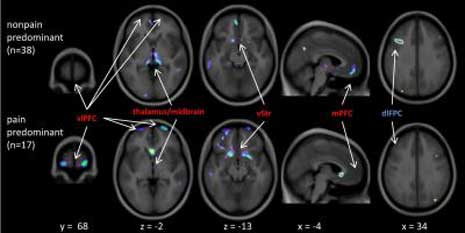
Previous studies have shown that fibromyalgia is associated with reductions in gray matter in parts of the brain, but the exact cause is not known. Using sophisticated brain imaging techniques, researchers from Louisiana State University, writing in The Journal of Pain, found that alterations in levels of the neurotransmitter dopamine might be responsible for gray matter reductions.

For the study, magnetic imaging resonance data from 30 female fibromyalgia patients were compared with 20 healthy women of the same age. The primary objective of the study was to confirm original findings about reduced gray matter density in a larger sample of fibromyalgia patients. They explored whether there is a correlation between dopamine metabolic activity and variations in the density of gray matter in specific brain regions.

Results showed there were significant gray matter reductions in the fibromyalgia patients, which supports previous research. In addition, the fibromyalgia patients showed a strong correlation of dopamine metabolism levels and gray matter density in parts of the brain in which dopamine controls neurological activity.

The authors concluded that the connection between dopamine levels and gray matter density provide novel insights to a possible mechanism that explains some of the abnormal brain morphology associated with fibromyalgia.

Reference: American Pain Society (2009, June 18). Fibromyalgia Patients Show Decreases In Gray Matter Intensity. ScienceDaily. Retrieved June 19, 2009

Asbestos – EPA Announces Public Health Emergency in Libby, Montana

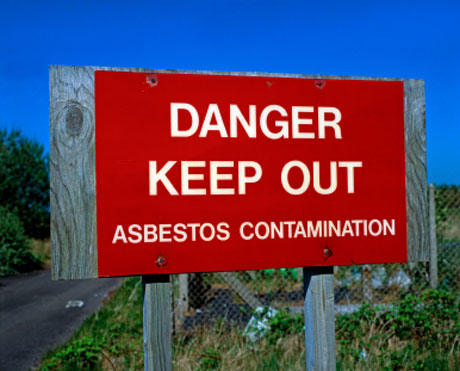
Asbestos-keep-out

EPA to Move Aggressively on Cleanup and HHS to Assist Area Residents with Medical Care  

WASHINGTON – U.S. Environmental Protection Agency Administrator Lisa P. Jackson today announced the agency has determined that a public health emergency exists at the Libby asbestos site in northwest Montana.  Over the past years, hundreds of asbestos-related disease cases have been documented in this small community, which covers the towns of Libby and Troy. The announcement was made today at a joint press conference with Department of Health and Human Services Secretary Kathleen Sebelius and U.S. Sens. Max Baucus and Jon Tester.  

This is the first time EPA has made a determination under the Comprehensive Environmental Response, Compensation, and Liability Act (CERCLA) that conditions at a site constitute a public health emergency.  This determination recognizes the serious impact to the public health from the contamination at Libby and underscores the need for further action and health care for area residents who have been or may be exposed to asbestos. Investigations performed by the Agency for Toxic Substance and Disease Registry have found the incidence of occurrence of asbestosis, a lung condition, in the Libby area staggeringly higher than the national average for the period from 1979-1998. EPA is working closely with the Department of Health and Human Services, which is making available a short-term grant to provide needed asbestos-related medical care to Libby and Troy residents.  

During her Senate confirmation hearing, Administrator Jackson committed to review the situation at the Libby asbestos site based on current site information, sound science and EPA’s legal authorities. As a result of her review, the Administrator has decided that conditions at the site present a significant threat to public health and that making a public health emergency determination is appropriate.  

“This is a tragic public health situation that has not received the recognition it deserves by the federal government for far too long. We’re making a long-delayed commitment to the people of Libby and Troy. Based on a rigorous re-evaluation of the situation on the ground, we will continue to move aggressively on the cleanup efforts and protect the health of the people,” said EPA Administrator Lisa P. Jackson. “We’re here to help create a long and prosperous future for this town.” She added, “Senator Max Baucus has been a tireless advocate for the people living in Libby and Troy who have confronted this public health tragedy for generations and we commend him for his work. We look forward to working with him and Senator Tester who has been working diligently since being elected to the Senate to bring much needed support to these communities.”  

“Senator Baucus and Senator Tester have powerfully brought the voices of the people of Libby and Troy to Washington so the nation could hear and understand what happened. They refused to give up on finding the best ways to help those who have suffered so much. Today’s announcement reflects our Administration’s concern for the residents of Lincoln County and our intention to act decisively to protect and improve their health and quality of life,’ said Secretary Sebelius. “The Department of Health and Human Services has been working closely with the EPA and the residents of Lincoln County for a number of years to conduct screenings and help provide access to care. Now, we have come together with Senator Baucus and Senator Tester, Administrator Jackson, and agencies across HHS, to offer a new grant to provide short-term medical assistance for screening, diagnostic and treatment services in a comprehensive and coordinated manner in partnership with local officials on the ground in Lincoln County. “  

Sen. Max Baucus, a long-time advocate on this issue, consistently sought out a determination of a public health emergency in this region.  

“This is a great day for Libby. This is a town that was poisoned by W.R. Grace, then had to wait year after year as the last administration failed to determine that public health emergency exists. But today is a new day,” said Sen. Baucus. “Today is the day that Administrator Jackson did the right thing and made this vital determination. Today is the day that Secretary Sebelius declared that people in Libby will get the health care they need. Today is the day that after years of work we were able to succeed in getting this done. Yet, we won’t stop here. We will continue to push until Libby has a clean bill of health.”  

“This is a long-overdue, common-sense decision that will go a long way for Libby and the thousands of folks who were poisoned there,” Sen. Tester said. “This decision will help make quality health care more accessible and it will open the door to get new resources on the ground.  We still have a long way to do right by the folks in Libby.  Working together with the Department of Health and Human Services and the Environmental Protection Agency, we’re making very good progress.”   

Secretary Sebelius tasked two HHS agencies – the Health Resources and Services Administration and the Centers for Disease Control and Prevention/Agency for Toxic Substances and Disease Registry – to help county residents. These two agencies will support a new grant to assist affected residents who need medical care. Local officials are currently putting together a grant proposal that will lay out options for provision of medical care that will work for the residents of Lincoln County. HHS anticipates that this grant can be awarded in August 2009.  

The Libby asbestos site has been on the EPA’s Superfund National Priorities List since 2002, and cleanup has taken place since 2000.  EPA has made progress in helping to remove the threat of asbestos in the land and air, and with it, the increased risks of lung cancer, asbestosis, and other respiratory problems. While EPA’s cleanup efforts have greatly reduced exposure, actual and potential releases of amphibole asbestos remain a significant threat to public health in that area.  

The Libby asbestos site includes portions of the towns of Libby and Troy and an inactive vermiculite mine seven miles northeast of the town. Gold miners discovered vermiculite in Libby in 1881; in the 1920s the Zonolite Company formed and began mining the vermiculite.  In 1963, W.R. Grace bought the Zonolite mining operations. The mine closed in 1990. It is estimated that the Libby mine was the source of over 70 percent of all vermiculite sold in the United States from 1919 to 1990.  

More information: http://www.epa.gov/libby 

EPA, EPA Announces Public Health Emergency in Libby, Montana,  June 17, 2009