Archive for category ‘Asthma‘

Airway cells use ‘tasting’ mechanism to detect and clear harmful substances

Industry releases toxic fumes

The same mechanism that helps you detect bad-tasting and potentially poisonous foods may also play a role in protecting your airway from harmful substances, according to a study by scientists at the University of Iowa Roy J. and Lucille A. Carver College of Medicine. The findings could help explain why injured lungs are susceptible to further damage.  

The study, published online July 23 in Science Express, shows that receptors for bitter compounds that are found in taste buds on the tongue also are found in hair-like protrusions on airway cells. In addition, the scientists showed that, unlike taste cells on the tongue, these airway cells do not need help from the nervous system to translate detection of bitter taste into an action that expels the harmful substance. 

The hair-like protrusions, called motile cilia, were already known to beat in a wave-like motion to sweep away mucus, bacteria and other foreign particles from the lungs. 

The study is the first to show that motile cilia on airway cells not only have this “clearing” function, but also use the receptors to play a sensory role. The researchers also found that when the receptors detect bitter compounds, the cilia beat faster, suggesting that the sensing and the motion capabilities of these cellular structures are linked. 

“On the tongue, bitter substances trigger taste cells to stimulate neurons, which then evoke a response — the perception of a bitter taste. In contrast, the airway cells appear to use a different mechanism that does not require nerves,” said Alok Shah, a UI graduate student and co-first author of the study. “In the airways, bitter substances both activate the receptors and elicit a response — the increased beating of the cilia — designed to eliminate the offending material.”

Shah and co-first author Yehuda Ben-Shahar, Ph.D., an assistant professor of biology at Washington University who was a postdoctoral fellow at the UI when the study was conducted, worked in the lab of senior study author Michael Welsh, M.D. (photo, upper left), UI professor of internal medicine and molecular physiology and biophysics, who holds the Roy J. Carver Chair of Internal Medicine and Physiology and Biophysics. Welsh also is a Howard Hughes Medical Institute investigator. 

“These findings suggest that we have evolved sophisticated mechanisms to guard ourselves from harmful environmental stimuli,” Ben-Shahar said. “Our work also suggests that losing cilia in the lungs, due to smoking or disease, would result in a reduced general ability to detect harmful inhaled chemicals, increasing the likelihood of further damaging an injured lung.”

In addition to Ben-Shahar, Shah and Welsh, the UI team included Thomas Moninger, assistant director of the UI Central Microscopy Research Facility, and Joel Kline, M.D., UI professor of internal medicine. 

The study was funded by grants from the National Institutes of Health. 

Reference:   University of Iowa, Airway cells use ‘tasting’ mechanism to detect and clear harmful substances, July 24, 2009


Chemical Sensitivity (MCS) and a number of medical conditions respond positively to Sauna Therapy


A recent paper on sauna therapy by Dr. Martin L. Pall argues for a novel mechanism for its mode of action (1). Pall argues that sauna therapy acts primarily by increasing the availability of a compound called tetrahydrobiopterin (BH4) in the body. BH4 is reported or thought to be depleted in a number of medical conditions that are also reported to respond positively to sauna therapy, including multiple chemical sensitivity, fibromyalgia, chronic fatigue syndrome, hypertension, vascular endothelial dysfunction and heart failure. This pattern of action can be explained, therefore, if sauna therapy increases the availability in the body of BH4.

Pall argues for two distinct mechanisms by which sauna therapy is expected to increase availability of BH4. Both of these act by increasing the synthesis of an enzyme, known as GTP cyclohydolase I, the rate limiting enzyme in the biosynthesis of BH4.

Sauna therapy is known to produce large increases in blood flow in the outer heated parts of the body and the consequent increase in vascular shear stress has been shown to induce large increases in GTP cyclohydrolase I activity and consequent increases in BH4.

A second such mechanism is mediated through the action of the heat shock protein, Hsp90, a protein known to be induced by modest tissue heating and a protein that is recruited into a complex of proteins containing GTP cyclohydrolase I. The Hsp90 protein lowers the proteolytic degradation of GTP cyclohydrolase I protein, leading to increased BH4 synthesis and this has been shown to lower, in turn, the partial uncoupling of the eNOS nitric oxide synthase. Increases in BH4 synthesis in response to both of these two mechanisms may be expected to feed BH4 to various tissues in the body including those not directly impacted by sauna therapy.

The health benefits of vigorous exercise may also be mediated, in part, via these same mechanisms.

A number of additional diseases are reported to involved BH4 depletion including Alzheimer’s, Parkinson’s, asthma, schizophrenia, bipolar disorder, pulmonary hypertension and type 2 diabetes so that each of these may respond to sauna therapy, as well.

It has been commonly assumed that the response of MCS cases to sauna therapy is mediated by a detoxification process known as depuration. There is some published evidence that some increase in detoxification does occur in response to sauna therapy. However the main influence of sauna therapy on MCS cases and certainly in these other medical conditions may well be through increased BH4 availability.

Reference: 1. Pall ML. 2009 Do sauna therapy and exercise act by raising the availability of tetrahydrobiopterin? Med Hypotheses. 2009 Jul 4.

Children susceptible to pesticides longer than expected, Berkeley study finds

Although it is known that infants are more susceptible than adults to the toxic effects of pesticides, this increased vulnerability may extend much longer into childhood than expected, according to a new study by researchers at the University of California, Berkeley.

Among newborns, levels of paraoxonase 1 (PON1), an enzyme critical to the detoxification of organophosphate pesticides, average one-third or less than those of the babies’ mothers. It was thought that PON1 enzyme activity in children approached adult levels by age 2, but instead, the UC Berkeley researchers found that the enzyme level remained low in some individuals through age 7.

Based upon the findings, reported this month in the journal Environmental Health Perspectives, the study authors recommend that the U.S. Environmental Protection Agency (EPA) re-evaluate the current standards for acceptable levels of pesticide exposure.

“Current EPA standards of exposure for some pesticides assume children are 3 to 5 times more susceptible than adults, and for other pesticides the standards assume no difference,” said Nina Holland, UC Berkeley adjunct professor of environmental health sciences and senior author of the paper. “Our study is the first to show quantitatively that young children may be more susceptible to certain organophosphate pesticides up to age 7. Our results suggest that the EPA standards need to be re-examined to determine if they are adequately protecting the most vulnerable members of the population.”

In 2001, the EPA began restricting organophosphate pesticides in products sold for use in homes, mainly because of risks to children. However, organophosphate pesticides, such as chlorpyrifos and diazinon, are still used in agriculture in the United States and elsewhere.

The study, conducted by UC Berkeley’s Center for the Health Assessment of Mothers and Children of Salinas (CHAMACOS), involves 458 children from an agricultural region who were followed from birth through age 7. Cord blood samples were collected from all children to determine their PON1 genotype and to obtain baseline measures of the enzyme’s activity level.

For more than 100 of the children in the study, researchers were able to obtain at least four additional measurements – at ages 1, 2, 5 and 7 – of PON1 activity. Almost all the children in the study had 2 to 3 time points assessed, for a total of 1,143 measurements of three types of PON1 enzyme activity.

One’s PON1 genotypic profile determines how effectively the enzyme can metabolize toxins. For example, people with two copies of the Q form of the gene – known as a QQ genotype – produce a PON1 enzyme that is less efficient at detoxifying chlorpyrifos oxon, a metabolite of chlorpyrifos, than the enzyme produced by people with two R forms of the gene. Similarly, individuals with two T forms of the PON1 gene on a different part of the chromosome generally have a lower quantity of the enzyme than do those with two C forms of the gene.

Previous research led by Holland found that some of the QQ newborns may be 50 times more susceptible to chlorpyrifos and chlorpyrifos oxon than RR newborns with high PON1 levels, and 130 to 164 times more susceptible than some of the RR adults.

Of the children in this latest study, 24 percent had the QQ genotype, and 18 percent had the TT genotype, both of which are associated with lower activity of the PON1 enzyme. Moreover, 7.5 percent of the children had both QQ and TT genotypes, which is considered an even more vulnerable profile.

On average, the quantity of enzyme quadrupled between birth and age 7. The greatest rise in enzyme activity was among children with the RR and CC variants of the PON1 gene, which quickly outpaced the increase in children with the QQ and TT genotypes.

The fact that enzyme activity remained low for certain kids with vulnerable genotypes well past age 2 was surprising for the study authors. The researchers are continuing to collect data for these children as they grow older to see if the pesticide susceptibility continues.

“In addition to its involvement in the metabolism of pesticides, many studies are now finding that PON1 may play an important role in protecting against oxidative stress, which is linked to diseases from asthma to obesity and cardiovascular disease,” said study lead author Karen Huen, a UC Berkeley Ph.D. student in environmental health sciences. “The children in our study whose genotypes are related to lower PON1 activity may not only be more susceptible to pesticides throughout much of their childhood, they may also be more vulnerable to other common diseases related to oxidative stress.”

Notably, other studies have found that PON1 genotypes vary by race and ethnicity, with the Q variants more common among Caucasians, less common among Latinos, and least common among African Americans. The majority of the subjects in this study were Mexican-American.

“What’s important about this study is that it shows that young children are potentially susceptible to certain organophosphates for a longer period of time than previously thought,” said Brenda Eskenazi, UC Berkeley professor of epidemiology and director of CHAMACOS and the Center for Children’s Environmental Health Research. “Policymakers need to consider these vulnerable populations when establishing acceptable levels of exposure to different pesticides.”

Funding from the National Institute of Environmental Health Sciences and the EPA helped support this research.

Reference: UC Berkeley, Children susceptible to pesticides longer than expected, study finds, June 22, 2009

Asbestos – EPA Announces Public Health Emergency in Libby, Montana

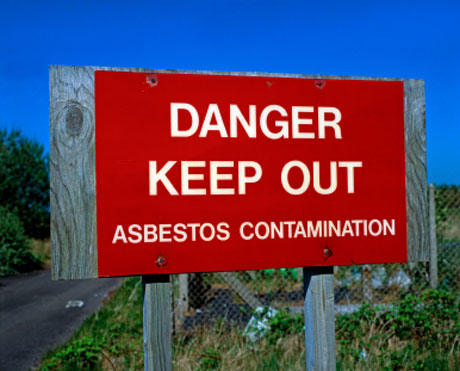
Asbestos-keep-out

EPA to Move Aggressively on Cleanup and HHS to Assist Area Residents with Medical Care  

WASHINGTON – U.S. Environmental Protection Agency Administrator Lisa P. Jackson today announced the agency has determined that a public health emergency exists at the Libby asbestos site in northwest Montana.  Over the past years, hundreds of asbestos-related disease cases have been documented in this small community, which covers the towns of Libby and Troy. The announcement was made today at a joint press conference with Department of Health and Human Services Secretary Kathleen Sebelius and U.S. Sens. Max Baucus and Jon Tester.  

This is the first time EPA has made a determination under the Comprehensive Environmental Response, Compensation, and Liability Act (CERCLA) that conditions at a site constitute a public health emergency.  This determination recognizes the serious impact to the public health from the contamination at Libby and underscores the need for further action and health care for area residents who have been or may be exposed to asbestos. Investigations performed by the Agency for Toxic Substance and Disease Registry have found the incidence of occurrence of asbestosis, a lung condition, in the Libby area staggeringly higher than the national average for the period from 1979-1998. EPA is working closely with the Department of Health and Human Services, which is making available a short-term grant to provide needed asbestos-related medical care to Libby and Troy residents.  

During her Senate confirmation hearing, Administrator Jackson committed to review the situation at the Libby asbestos site based on current site information, sound science and EPA’s legal authorities. As a result of her review, the Administrator has decided that conditions at the site present a significant threat to public health and that making a public health emergency determination is appropriate.  

“This is a tragic public health situation that has not received the recognition it deserves by the federal government for far too long. We’re making a long-delayed commitment to the people of Libby and Troy. Based on a rigorous re-evaluation of the situation on the ground, we will continue to move aggressively on the cleanup efforts and protect the health of the people,” said EPA Administrator Lisa P. Jackson. “We’re here to help create a long and prosperous future for this town.” She added, “Senator Max Baucus has been a tireless advocate for the people living in Libby and Troy who have confronted this public health tragedy for generations and we commend him for his work. We look forward to working with him and Senator Tester who has been working diligently since being elected to the Senate to bring much needed support to these communities.”  

“Senator Baucus and Senator Tester have powerfully brought the voices of the people of Libby and Troy to Washington so the nation could hear and understand what happened. They refused to give up on finding the best ways to help those who have suffered so much. Today’s announcement reflects our Administration’s concern for the residents of Lincoln County and our intention to act decisively to protect and improve their health and quality of life,’ said Secretary Sebelius. “The Department of Health and Human Services has been working closely with the EPA and the residents of Lincoln County for a number of years to conduct screenings and help provide access to care. Now, we have come together with Senator Baucus and Senator Tester, Administrator Jackson, and agencies across HHS, to offer a new grant to provide short-term medical assistance for screening, diagnostic and treatment services in a comprehensive and coordinated manner in partnership with local officials on the ground in Lincoln County. “  

Sen. Max Baucus, a long-time advocate on this issue, consistently sought out a determination of a public health emergency in this region.  

“This is a great day for Libby. This is a town that was poisoned by W.R. Grace, then had to wait year after year as the last administration failed to determine that public health emergency exists. But today is a new day,” said Sen. Baucus. “Today is the day that Administrator Jackson did the right thing and made this vital determination. Today is the day that Secretary Sebelius declared that people in Libby will get the health care they need. Today is the day that after years of work we were able to succeed in getting this done. Yet, we won’t stop here. We will continue to push until Libby has a clean bill of health.”  

“This is a long-overdue, common-sense decision that will go a long way for Libby and the thousands of folks who were poisoned there,” Sen. Tester said. “This decision will help make quality health care more accessible and it will open the door to get new resources on the ground.  We still have a long way to do right by the folks in Libby.  Working together with the Department of Health and Human Services and the Environmental Protection Agency, we’re making very good progress.”   

Secretary Sebelius tasked two HHS agencies – the Health Resources and Services Administration and the Centers for Disease Control and Prevention/Agency for Toxic Substances and Disease Registry – to help county residents. These two agencies will support a new grant to assist affected residents who need medical care. Local officials are currently putting together a grant proposal that will lay out options for provision of medical care that will work for the residents of Lincoln County. HHS anticipates that this grant can be awarded in August 2009.  

The Libby asbestos site has been on the EPA’s Superfund National Priorities List since 2002, and cleanup has taken place since 2000.  EPA has made progress in helping to remove the threat of asbestos in the land and air, and with it, the increased risks of lung cancer, asbestosis, and other respiratory problems. While EPA’s cleanup efforts have greatly reduced exposure, actual and potential releases of amphibole asbestos remain a significant threat to public health in that area.  

The Libby asbestos site includes portions of the towns of Libby and Troy and an inactive vermiculite mine seven miles northeast of the town. Gold miners discovered vermiculite in Libby in 1881; in the 1920s the Zonolite Company formed and began mining the vermiculite.  In 1963, W.R. Grace bought the Zonolite mining operations. The mine closed in 1990. It is estimated that the Libby mine was the source of over 70 percent of all vermiculite sold in the United States from 1919 to 1990.  

More information: http://www.epa.gov/libby 

EPA, EPA Announces Public Health Emergency in Libby, Montana,  June 17, 2009  

Childhood Asthma – Study shows how neighborhood characteristics play a significant role

Air Pollution causes Asthma

Neighborhoods with restaurants, entertainment, cultural facilities and ethnic diversity have lower asthma rates in the city of Chicago than neighbourhoods where residents are less likely to move, and where there are more churches and not-for-profit facilities. 

Published in the spring 2009 issue of  The Journal of Allergy and Clinical Immunology, the two-year study led by Ruchi Gupta, MD, MPH, a researcher at Children’s Memorial Hospital and associate professor of pediatrics at Northwestern University’s Feinberg School of Medicine, showed that neighborhoods with more community vitality, specifically economic potential, community amenities and social capital had lower asthma rates. The study focused on 287 Chicago neighborhoods, where nearly 50,000 children grades K-8 were screened for asthma. Asthma is the leading chronic childhood illness, affecting more than 9 million children nationwide. Chicago has twice the national average asthma mortality rate. 

 â€œPrevious studies showed that neighborhoods right next to each other with similar racial makeup had very different asthma rates; we wanted to see what else was going on in each neighborhood to cause such a disparity,” said Gupta. “So we looked at specific factors in each neighborhood.” 

Ethnically diverse communities with greater potential for economic development that were civically engaged, meaning that there were high percentages of registered voters had low asthma rates while stable communities, defined as communities where residents were less likely to move, with more social interaction had higher asthma rates. Although it is not entirely clear how these factors affect health outcomes, previous research has shown that asthma and other chronic illnesses of childhood are associated with poverty, which may explain why communities with low asthma rates had a greater capacity for economic growth. 

Researchers suspect that the association between neighborhood stability and asthma may indicate that homes in which residents are less likely to move receive less frequent and thorough cleanings, leading to an accumulation of indoor pollutants known to trigger asthma.  Similarly, the association of higher interaction potential and increased asthma may signify overcrowding, which also leads to increased indoor pollutants.

Besides community influence, other factors that affect the rate of childhood asthma include income and education, housing problems with sensitivities to cockroaches, dust mites, mice and rats, exposure to air pollution and individual factors. A collaboration of many factors may ultimately cause asthma.

With these insights, we are better equipped to develop more effective interventions to help reduce asthma in children living in urban environments,” said Gupta. 

Information on the neighborhoods was gathered from the Metro Chicago Information Center. Gupta collaborated on this study with Xingyou Zhang, PhD, Lisa K Sharp, PhD, John J Shannon, MD, and Kevin B Weiss, MD, MPH. In a currently ongoing study, Gupta is further investigating the true importance of these protective factors by talking to and surveying residents in a Chicago neighborhood with a high childhood asthma rate. 

Reference: Childrens Memorial Hospital, Pree Release: Study shows how neighborhood characteristics play a significant role in childhood asthma, June 5, 2009