Scented store environments, dangerous to the health of employees and customers
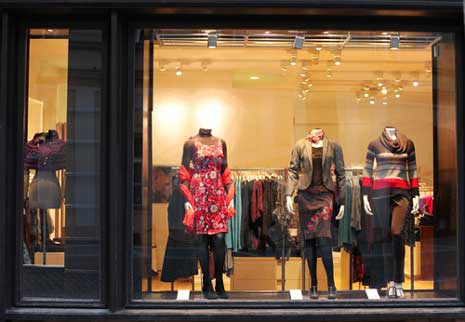
Scent marketing alarms the trade supervision and labor unions
Businesses that use fragrances in order to encourage customers to linger and buy, are becoming increasingly common. The scent marketing industry promotes the retail branch strongly. The fragrances that one finds in the shops are mixtures of different natural essential oils or chemical compositions. Neither is harmless for employees or customers. In Denmark, the trade supervision and labor unions are keeping their eye on the American fashion chain, “Abercrombie & Fitch”. The fashion chain is known for using the fragrance Citronellol, an aromatic oil that is classified as questionable because it can be harmful to one’s health and it can trigger allergies. The Danish trade supervision is currently committed to putting an end to the scenting in order to protect the employees and customers of the fashion chain.
Authorities and labor unions are going up against scented store environments
In Denmark, labor unions are paying close attention to the authorities’ course of action against the American fashion company “Abercrombie & Fitch”. In their shops, it smells strongly of perfume. The significant fragrance is supposed to bind the customer to the brand and increase sales. The newspaper “Politiken DK” reports that so-called scent marketing has extremely increased in Denmark in the past three years. Anyone who visits certain stores frequently or is employed there, can develop allergies. It is an unnecessary burden on the employees, because many of the fragrances can cause allergic reactions – the newspaper quoted the head of the trade supervision.
Contamination of indoor air with chemicals and allergenic fragrance oils
The perfumes for a scented environment are often led directly into the store through the air conditioning and ventilation system. Smaller shops set up bottles with aromatic oils, containing wooden sticks which release the fragrance into the room. Both are questionable, not only for people who already suffer from perfume allergies, but also for asthmatics and chemically sensitive people (MCS). Even healthy people may sensitize over time and develop allergies.
The trade supervision wants to protect employees and customers
We are most likely dealing with allergens, which are injected into the stores, is what the head of the trade supervision told the newspaper “Politiken DK”. That’s why the authorities tried to contact “Abercrombie & Fitch” at the end of last year. The authorities tried to make it clear to them that they wanted to protect employees against the high concentration of perfume in the shops, because it is an unnecessary burden.
Labor unions are receiving more and more complaints
Danish labor unions report that they receive more and more complaints from union members about the scenting of their workplace. Therefore, the actions of the trade supervision in the case of “Abercrombie & Fitch” are being closely observed. It is a major health problem for the employees in those stores, but also for the customers, said a union spokesperson to “Politiken DK”. The customers, unlike the employees have the choice and can simply stay away from the scented store. The employee unfortunately does not have this choice, especially in times when everyone is happy to even have a job.
It remains to be seen how the American company will behave, what measures the Danish trade supervision will take, and how much pressure the Danish labor unions will make. If the Abercrombie & Fitch” management is smart, they will stop exposing their employees and customers to substances that can cause illness. Sick employees cost a company money, and when customers realize why they don’t feel well in a shop and stay away, they too, can cost the company a lot of money.
The German Federal Environmental Agency has been warning against the use of fragrances for this purpose for years – through several press releases and it’s own published background paper which writes about this issue, „Fragrances: When something pleasant becomes a burden.” (german) An increase of scented shops has also been reported in Germany. So far, there is no authority or union which is really trying to prevent it.
Autor: Silvia K. Müller, CSN – Chemical Sensitivity Network, 17. Januar 2012
Literatur:
Politiken.DK, Duftende butikker er farlige for ansattes og kunders helbred, 13. Januar 2012
Related Articles: